

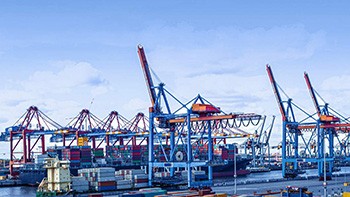


MSC、 Hapag Lloyd voluntarily suspended branch routes and concentrated its capacity on main routes
In June 2026, the world's two leading consolidation giants, MSC and Hapag Lloyd, successively released notices on route network optimization and capacity control, focusing on the market supply and demand pattern before the peak season to initiate a large-scale capacity reconstruction. The core idea is to withdraw from regional branch lines with low cargo volume and meager profits, concentrate ship resources to tilt towards high profit main routes in China, the United States, and China Europe, and combine with the overall blank voyage plan to directly compress the global effective cabin supply, driving the continuous upgrading of the shortage of spot market cabin space.
Hapag Lloyd has made it clear that starting from July, the CCM Mexico Central America branch line will be suspended. This route will operate for a long time in the three major regional ports of La Liga Cardenas, El Salvador, and Corinto, Nicaragua. The last ship, MV Chiapas, will depart from La Liga Cardenas on July 7th and will no longer resume direct services.
This branch line has a sparse cargo flow all year round, with a low single voyage container volume. Coupled with fierce competition in regional short distance transportation, freight rates have remained low for a long time, and voyage operations are difficult to cover the comprehensive costs of fuel, port, and labor, making it a typical inefficient transportation sector. To ensure the connection of local cargo flow, the shipping company has simultaneously announced alternative transit routes: goods bound for Corinto, Nicaragua will be switched to the existing CCE trunk line for reception; Salvadoran goods need to be transported to Barrios Port in Guatemala first, and then transferred through inland trailers for a second time. This will prolong regional logistics efficiency and generate additional land surcharges. The comprehensive shipping cost of local foreign trade enterprises in Central America is expected to increase by 10% -20%.
During the same period, MSC simultaneously contracted multiple weak cargo routes from India to the United States, and shut down the Indus Express East Coast route that had been in operation for twelve years. The released ships will no longer supplement regional short haul routes and will be transferred to the Far East for use on the main transoceanic routes.
In addition to directly withdrawing routes, the two shipping companies will implement a unified peak season cabin control strategy and add a batch of blank sailings in the July schedule, covering all regional routes in Asia, America, Europe, Southeast Asia, and South America. Overall, it is estimated that this will reduce the effective cabin space available for sale worldwide by 10% -15%.
From the perspective of route allocation logic, the implementation of a hierarchical guarantee mechanism for transportation resources: priority is given to the main routes of China US Trans Pacific, Asia Europe Far East to Northern Europe/Mediterranean, with priority reserved for ships and sufficient cabin allocation; The remaining regional routes have tightened their cabin quotas comprehensively, significantly reducing the proportion of spot cargo space allocation for bulk cargo. Only long-term contracted customers can lock in stable space, and the temporary bulk cargo booking schedule has been significantly extended.
In addition to ensuring supply on the main routes, the Southeast Asian near ocean routes and the East West Coast routes of South America have implemented cabin control measures simultaneously: shipping companies have reduced the amount of basic cabin space available on branch routes, restricted the number of single ticket booking containers, raised the threshold for temporary booking review, and some ports have implemented quota release of cabins; At the same time, reduce the number of branch line overtime ships and temporary additional ship plans, and no longer hedge regional shipping demand through additional shifts.
Although Southeast Asia and South America currently have stable basic cargo volume, the profit margin per container is far less than that of the main routes in the United States and Europe. With limited ship resources, shipping companies actively compress the supply of feeder lines, forcing cargo to flow towards high-yield routes. According to feedback from the freight forwarding market, there have been instances in recent times where spot bookings in Southeast Asia and South America have been unable to secure cargo space, temporary container cancellations have occurred, and shipping schedules have been delayed by more than a week.